G+1 BUILDING
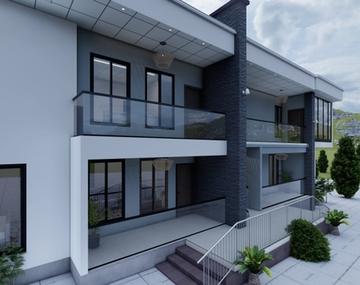
This building is a **Modern two-storey residential apartment block** designed with a contemporary architectural style that combines functionality, elegance, and comfort. The structure features a spacious balconies a large floor-to-ceiling windows for maximum natural lighting, and a combination of white exterior finishes and dark stone-clad columns that create a striking visual contrast.
The ground floor plan consists of **two self-contained residential units**, each containing a spacious living room, dining area, kitchen, master bedroom, additional bedroom, toilets/bathrooms, and verandas. A centrally positioned staircase provides access to the upper floor, ensuring privacy and efficient circulation between levels.
The exterior design emphasizes openness and luxury, featuring wide terraces, covered balconies, modern lighting fixtures, expansive paved surroundings, landscaped greenery, and panoramic views. The building is suitable for multi-family occupancy, rental apartments, staff housing, or a modern residential complex, offering a balance of aesthetics, durability, and practical living spaces.