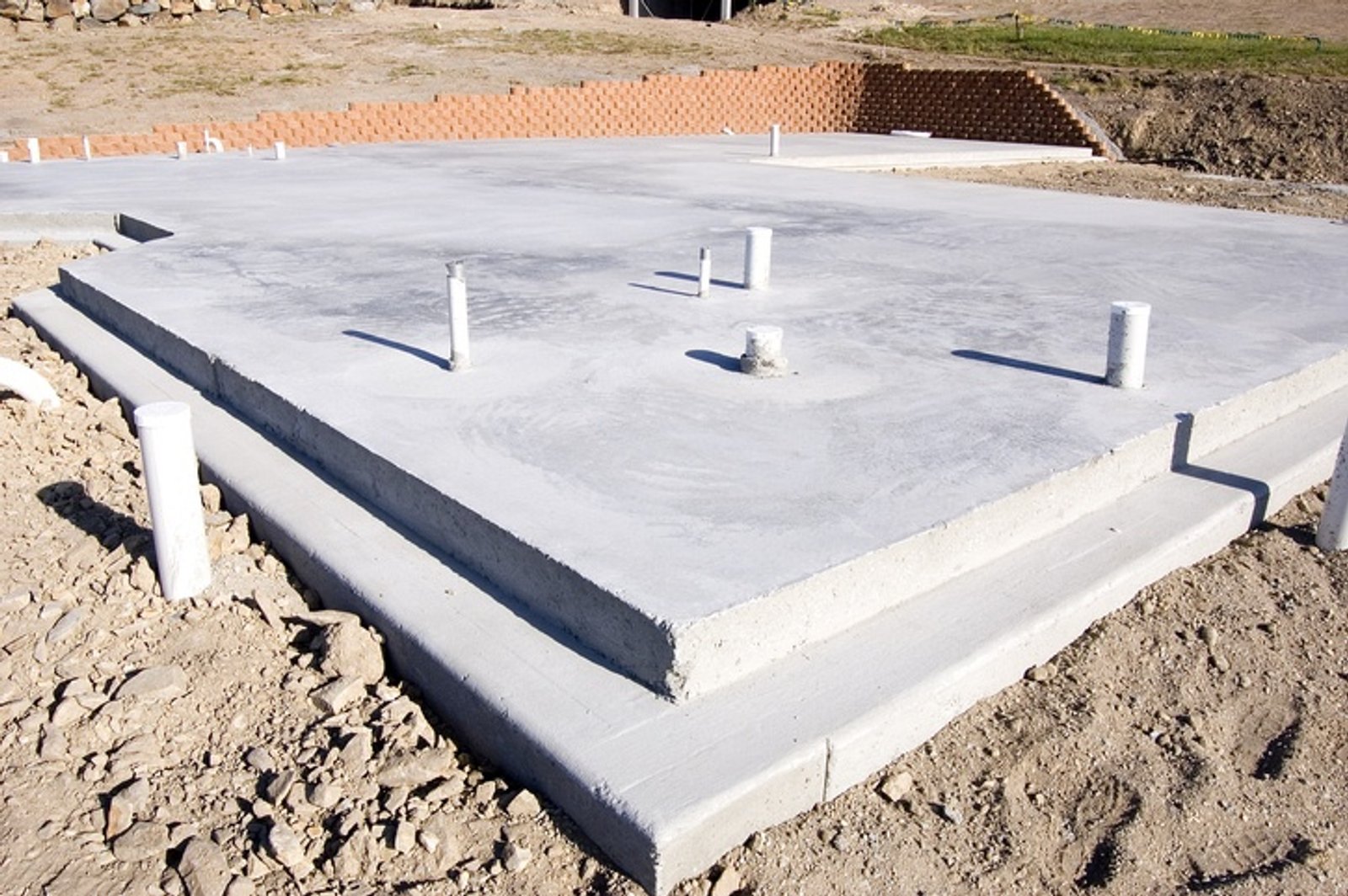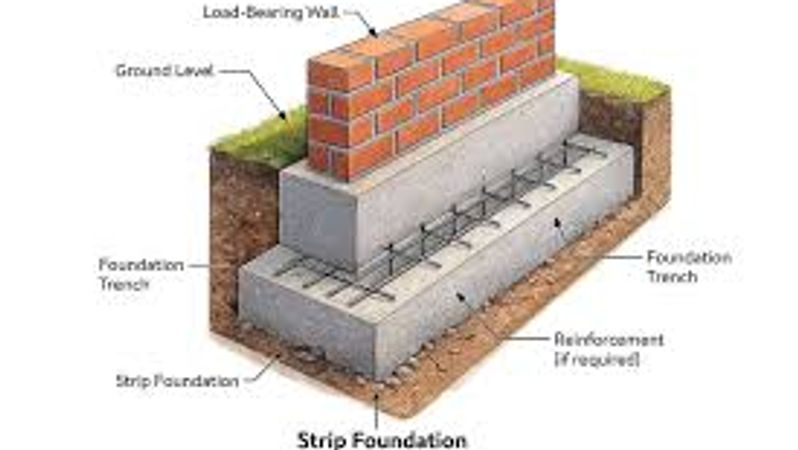
A strip foundation is a continuous strip of concrete laid beneath load-bearing walls to support and distribute the weight of a structure safely into the ground. It is one of the most common types of shallow foundations used in building construction, especially for residential and small commercial structures.
The foundation is constructed by excavating trenches along the lines where walls will be built. These trenches are then filled with concrete, sometimes reinforced with steel bars (rebar) depending on the load and soil conditions. The width of the strip is usually greater than the wall thickness so that the load is spread over a larger area of soil, reducing the risk of excessive settlement. In some cases, blockwork or masonry is built on top of the concrete strip to reach ground level.
Strip foundations are most suitable where the soil has good bearing capacity near the surface, such as in firm clay, sand, or gravel. They are not recommended for very weak, waterlogged, or highly compressible soils unless special design measures are taken.
Advantages of strip foundations:
- Cost-effective: They are relatively cheap compared to deep foundations because they require less material and simpler construction methods.
- Simple construction: The design and construction process is straightforward, making it easy to execute with basic equipment and labor.
- Suitable for low-rise buildings: Ideal for houses and small structures where loads are moderate.
- Less specialized labor required: Unlike complex foundations, they do not require highly skilled workers or advanced technology.
- Efficient load distribution: They effectively spread the load along the length of the wall.
Disadvantages of strip foundations:
- Limited to good soil conditions: They cannot be used effectively on weak or unstable soils without risk of settlement or failure.
- Not suitable for heavy loads: Large or multi-storey buildings may require deeper or more advanced foundation systems.
- Prone to settlement issues: Uneven soil conditions can lead to differential settlement and cracking in the structure.
- Excavation challenges: In areas with high groundwater levels, excavation can be difficult and may require dewatering.
- Frost susceptibility: In cold regions, foundations must be placed below the frost line to prevent movement due to freezing and thawing.
In summary, strip foundations are a practical and economical solution for supporting load-bearing walls in many construction projects, provided the ground conditions are stable and the structural loads are not excessive.